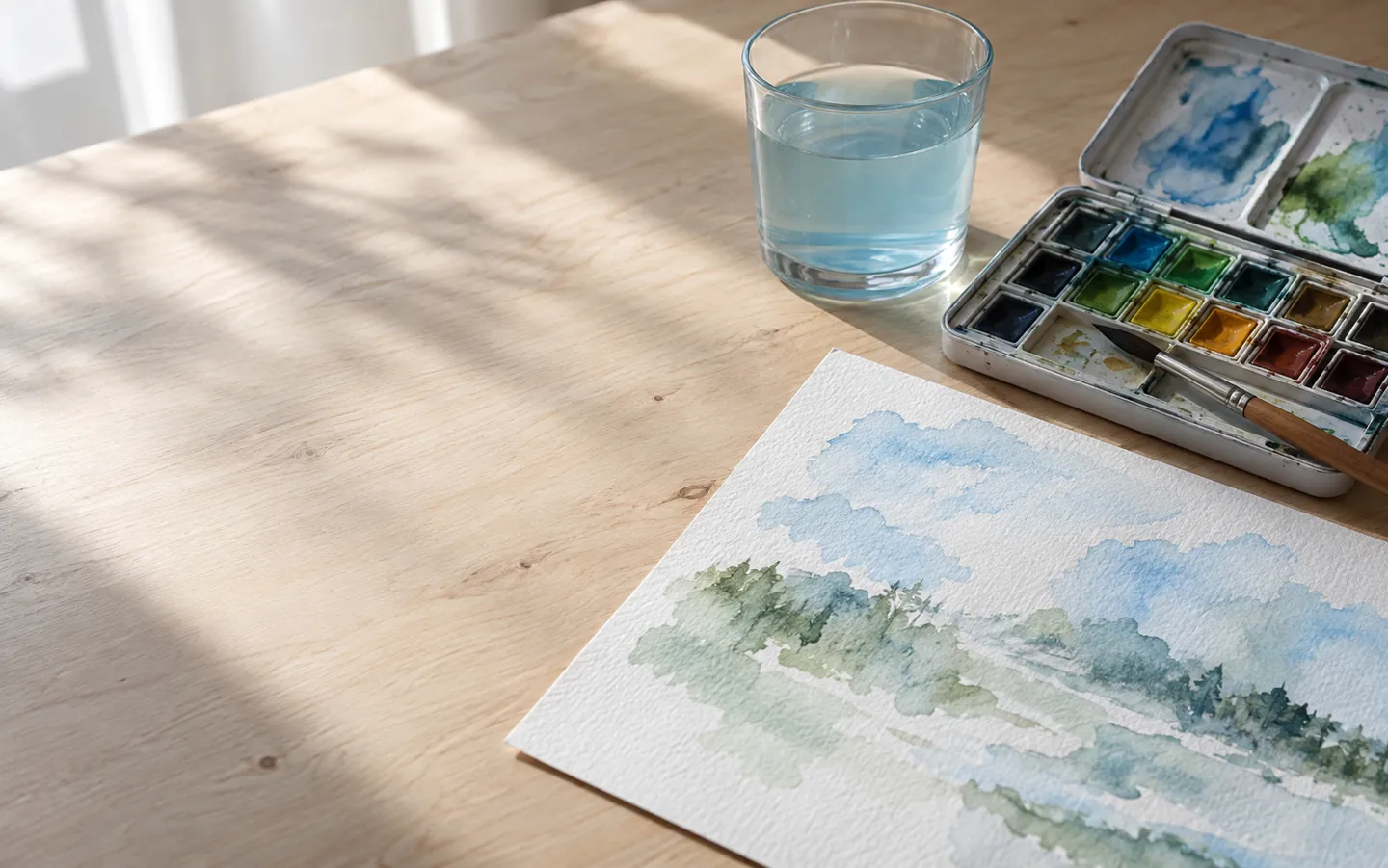
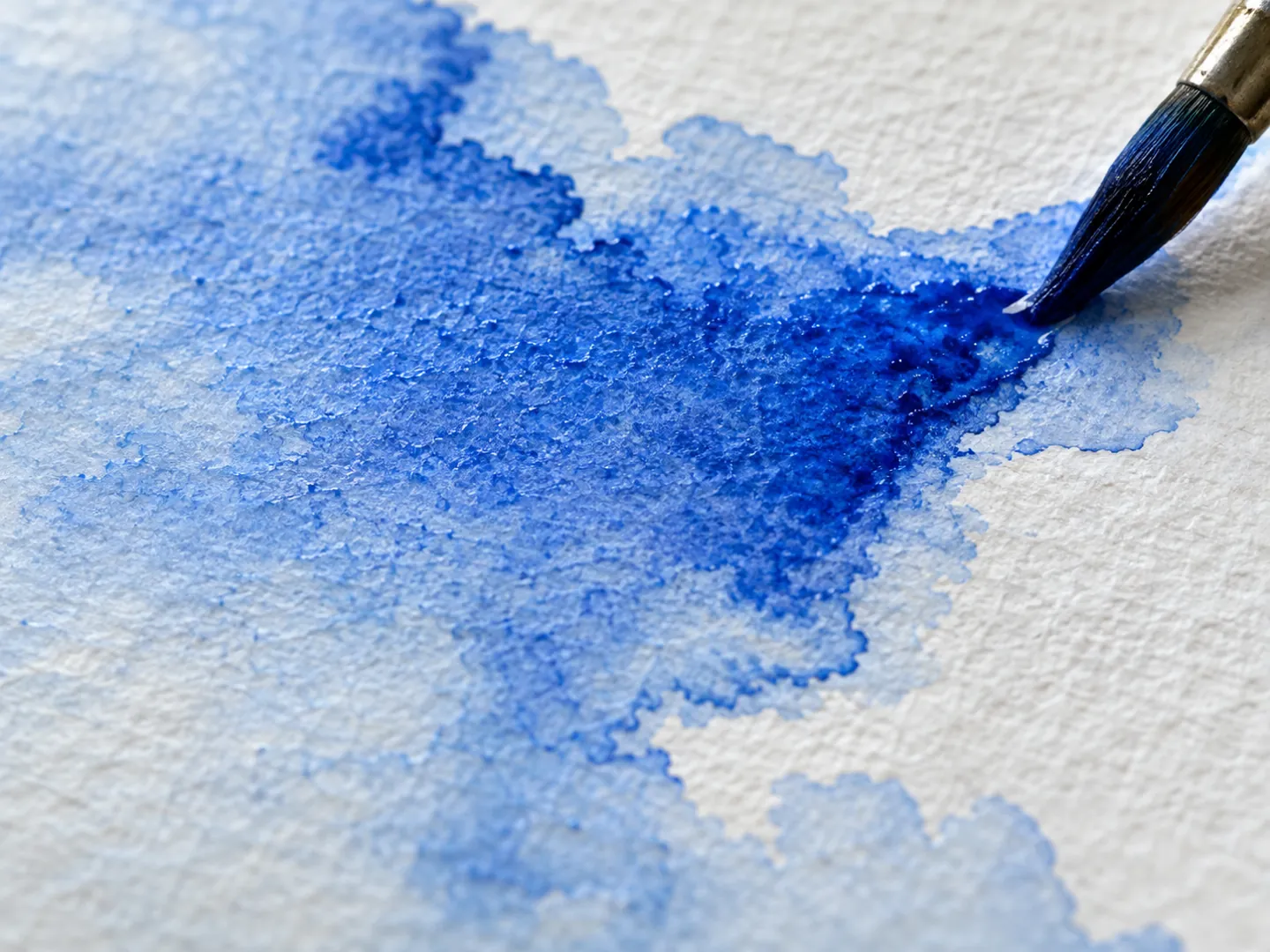
Most of its light comes from the paper underneath. Once you know that, the rest follows: how you plan a painting, which paper you choose and where you hang it.
Pick what you want to hang to see the light level US museum guidance works to. The bar shows how sensitive to light that kind of object is.
Based on Texas Historical Commission and CCAHA (Philadelphia) guidance for museum display. Home rooms vary, so treat these as a guide.
TWO NUMBERS WORTH KNOWING
Light adds up, so museums ration it.
One figure for brightness, one for the yearly total.
50 lux
Maximum light on a watercolor
Watercolors, photographs and other papers are listed as sensitive, with a maximum of 50 lux (5 foot-candles). Oil paintings are allowed up to 150 lux.
BRIGHTNESS · TEXAS HISTORICAL COMMISSION
50,000 lux hours
Annual light exposure for very sensitive items
At 50 lux, that allows about 1,000 hours on show a year. Damage is cumulative: months at low light can equal a few days of bright sun.
YEARLY DOSE · CCAHA
Both guides also limit ultraviolet light, ideally to 0 to 10 microwatts per lumen, and CCAHA says UV from daylight should be cut by careful placement and filtering.
FOUR THINGS TO KNOW ABOUT PAPER
Pick the surface, then the weight.
Watercolor is usually painted on paper, and the sheet changes how the paint behaves. These are the terms you will see on the label.
Hot-pressed (HP) is smooth
A fine-grained surface with almost no tooth. Paint dries quickly, which suits large, even washes and fine detail.
Cold-pressed (NOT) is in the middle
Cold-pressed paper is slightly textured. It is also called NOT, because it is not hot-pressed.
Rough has the most tooth
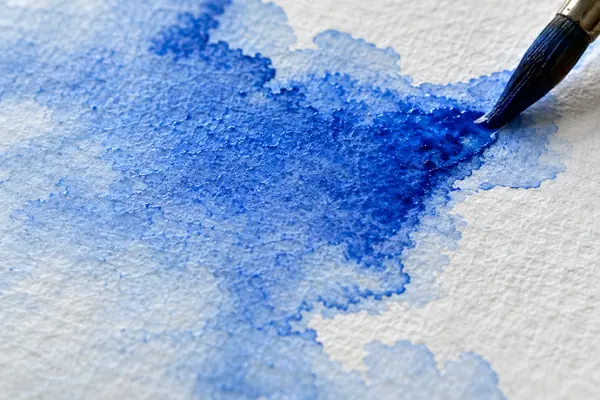
Water pools in the dips of the texture, which gives washes a grainy look.
Heavier sheets warp less
Common weights run from 90 lb (190 gsm) to 140 lb (300 gsm) and heavier. Lighter sheets are usually stretched first so they do not warp.
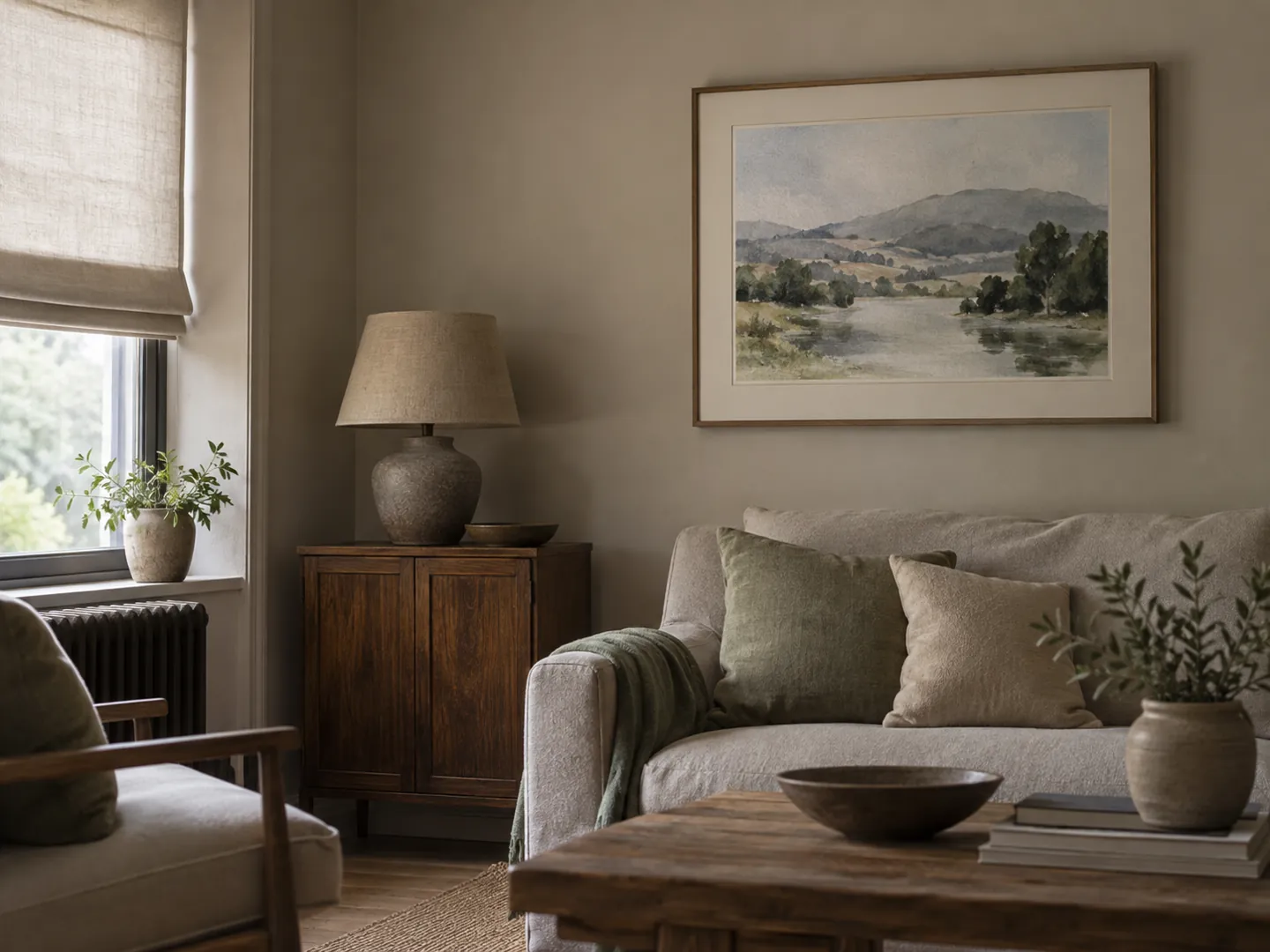
AI-generated image, not a photograph of a real person or place.AI-generated image, not a photograph of a real person or place.
A SHORT HISTORY
From apothecary jars to tubes.
Albrecht Dürer made some of the earliest watercolors in the modern sense at the end of the 15th century. Early painters bought raw materials from apothecaries; by the later 18th century in Britain colors came as small cakes, and in the 19th century in tubes.
The early 19th century is often called watercolor's golden age, with Girtin, Cotman and Turner among its leaders, and the Society of Painters in Watercolour was founded in 1804. Add white and the paint turns opaque: that is gouache, or bodycolor.
Questions
Questions people ask
What is watercolor paint made of?
Fine pigment particles held in a water-soluble binder. Art UK names gum arabic as the usual binder; Tate adds that the binder is typically gum with glucose, glycerine and wetting agents.
Why do watercolor painters avoid white paint?
Most watercolor is transparent, so the white of the paper gives the washes their glow. White areas are often left unpainted. Adding white makes the paint opaque, which is gouache or bodycolor.
What is the difference between hot- and cold-pressed paper?
Hot-pressed (HP) paper is smooth with almost no tooth. Cold-pressed paper has a slight texture and is also called NOT because it is not hot-pressed. Rough paper has the most texture.
What does a lightfastness rating mean?
ASTM D5067 is the US specification for artists' watercolor paints and includes requirements for pigment identification and lightfastness. Under the related test, ASTM I is rated excellent and ASTM II good.
How should I hang a watercolor at home?
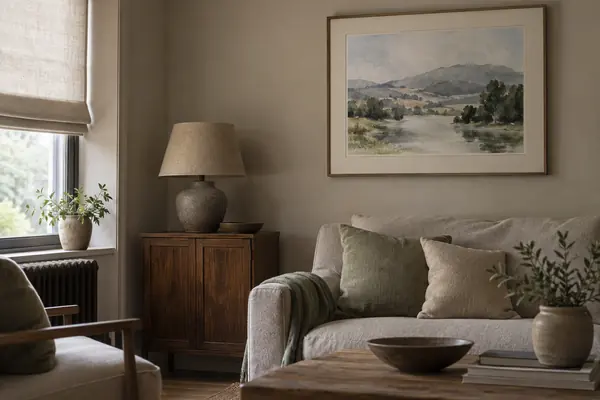
US museum guidance keeps watercolors at 50 lux (5 foot-candles) or less and filters UV from daylight. At home, a wall out of the sun and UV-filtering glazing follow the same idea.